
Dust, droppings and hard water spots
Solar Maintenance & Cleaning in Chandler, AZ
Clean glass and a routine check keep a desert system producing what it should.
- Free written estimate after we look at the system, the monitoring data and the roof
- Itemized pricing that separates parts, labor, roof work and any manufacturer warranty claim
- Permit and utility paperwork identified up front when the work calls for it
Desert Dust Does Not Wash Off on Its Own
Solar maintenance and cleaning matters more in Chandler than in rainy parts of the country. The city averages only about 9 inches of rain a year, so panels rarely get a full rinse. Dust from monsoon storms, farm fields and construction settles on the glass, and the occasional light shower turns it into a muddy film that dries hard. Bird droppings add spots that block light from whole cells.
How dirt affects output
A thin, even layer of dust trims output a little. Heavy dirt, droppings or mud near the bottom edge of the panel can do more, because shading part of a cell can reduce output for that whole section of the panel. EnergySage notes that desert areas like the Southwest need more frequent cleaning than most places. How much output a cleaning recovers depends on how dirty the panels were, which is why we compare production before and after.
Why we use purified water
Tap water can leave hard-water spots and residue on glass, especially when it dries fast on a hot panel, and those spots block light and are hard to remove. Professional cleaning uses purified or deionized water with soft brushes so the glass dries clear. We avoid pressure washers, harsh chemicals and abrasive pads, which can damage the glass coating or the seals around the panel edges, and we clean in the morning before the glass gets hot.
More than a wash
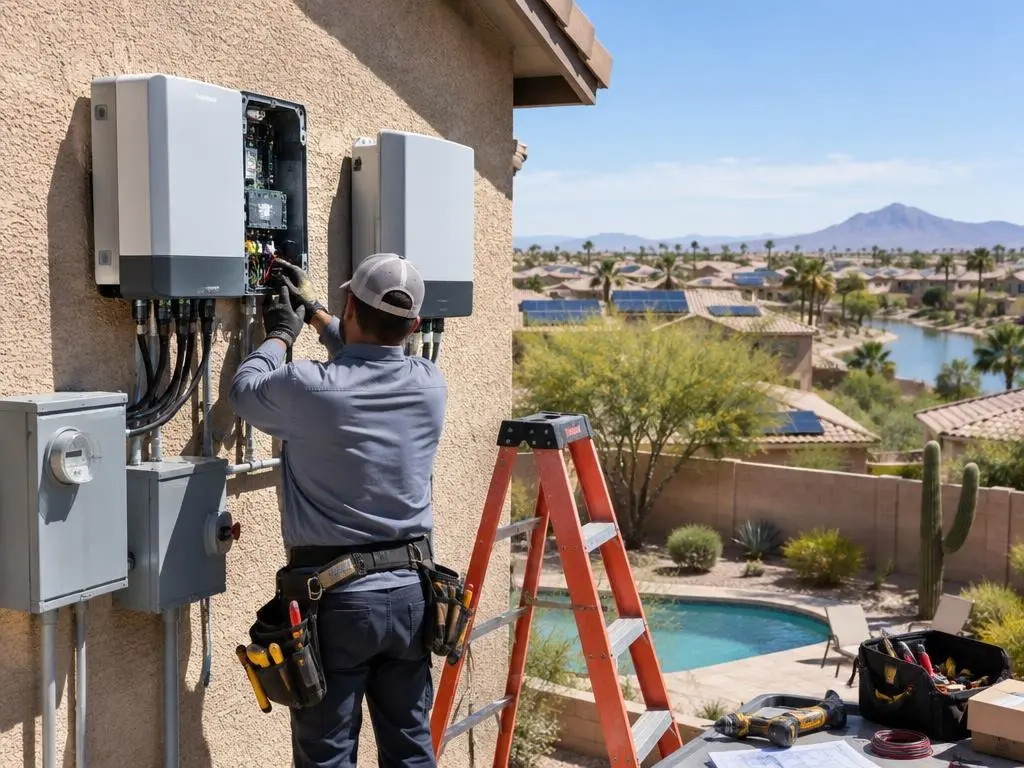
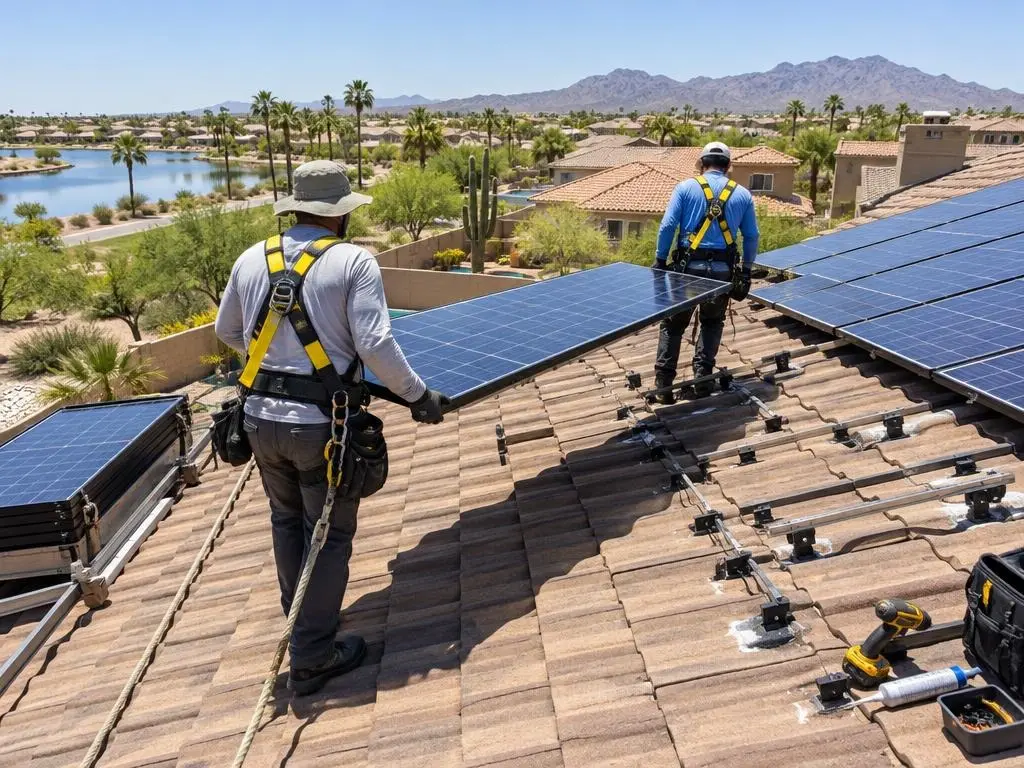
While we are on the roof, we take a look at the things that wear in this climate: connectors, cable supports, conduit straps, the racking and roof attachments, and signs of birds settling under the array. On the ground, we check the inverter for error history and look over the disconnects. If production numbers were low before the cleaning, we compare them after to see whether dirt was the whole story or there is another problem to track down.
How often to clean
Most Chandler systems benefit from a cleaning once or twice a year. Good times are after the monsoon season, when storms have left dust on the panels, and in spring before the long summer production months. Homes near open fields, unpaved lots or active construction may need more. Watching your monitoring is the simplest guide: if output drifts down on clear days and recovers after a cleaning, you have found your schedule.
Safety on the roof
Walking on concrete tile can crack it, and wet glass on a pitched roof is slippery. If you clean your own panels, do it from the ground with a soft brush on an extension pole and purified water, early in the day. Never spray water on hot panels or climb onto the array itself.
What a Maintenance Visit Includes
Cleaning plus a routine check of the parts that wear out.
Purified-water panel wash
Soft-brush cleaning with purified water so glass dries clear without mineral spots.
Roof hardware look-over
Checking connectors, cable supports, conduit straps and racking for heat and wind wear.
Bird activity check
Looking for nesting, droppings or chewed wiring under the array.
Inverter and disconnect check
Reviewing error history and confirming disconnects and breakers look right.
Before-and-after production review
Comparing output before and after cleaning to see whether anything else needs attention.
Typical Maintenance and Cleaning Costs
| Job | Typical range |
|---|---|
| Cleaning, per panel | $10 to $20 |
| Cleaning, 15 to 25 panels | $150 to $500 |
| Cleaning, 25 to 35 panels | $250 to $700 |
| Annual inspection | $150 to $300 |
| Cleaning plus inspection, small system | $300 to $700 |
Ranges vary with panel count, roof height and pitch, how dirty the panels are, and whether repairs turn up during the check. Your written estimate is the price.
How a Maintenance Visit Works
1. Check recent production
We look at your monitoring data to set a baseline before cleaning.
2. Inspect and wash
We look over the roof hardware, then wash the panels with purified water.
3. Check the ground equipment
We review the inverter, disconnects and breakers.
4. Report back
You get a summary of what we cleaned, what we saw, and anything that needs follow-up.
Solar Maintenance & Cleaning Questions
Does rain clean my panels?
Steady rain helps, but Chandler gets only about 9 inches a year, often in short bursts that turn dust into mud. Most systems here need a hand wash once or twice a year.
Can I use a pressure washer?
No. High pressure can damage the glass coating and the seals around the panel edges. Use a soft brush and purified water, or have a professional do it.
When is the best time to clean?
After monsoon season and again in spring are good times. Clean early in the morning while the glass is cool.
Will cleaning fix low production?
If dirt was the problem, yes. If output is still low after cleaning, something else is going on, such as a failed inverter or wiring problem, and we will tell you what we see.
Solar Maintenance & Cleaning Service Areas
- Solar Panel Repair in Chandler, AZ
- Solar Panel Repair in Ocotillo, AZ
- Solar Panel Repair in Sun Lakes, AZ
- Solar Panel Repair in Sun Groves, AZ
- Solar Panel Repair in Downtown Chandler, AZ
- Solar Panel Repair in Fulton Ranch, AZ
- Solar Panel Repair in Maricopa, AZ
- Solar Panel Repair in Province, AZ
- Solar Panel Repair in Rancho El Dorado, AZ
- Solar Panel Repair in Tortosa, AZ
- Solar Panel Repair in Casa Grande, AZ
- Solar Panel Repair in Arizona City, AZ
- Solar Panel Repair in Eloy, AZ
- Solar Panel Repair in Stanfield, AZ
- Solar Panel Repair in Sacaton, AZ
Get a Solar Maintenance & Cleaning Estimate
Tell us how many panels you have and when they were last cleaned.